
Tune into an inspiring and informative livestream exploring nature’s most powerful healer, biocultural diversity.
Why is it that 80% of Earth’s remaining terrestrial biodiversity is located within territories inhabited by Indigenous Peoples and local communities? And how can this help us to address the climate and biodiversity crisis?
Western science is beginning to catch up with the fundamental knowledge that Indigenous Peoples have known for generations, that the cultural practices and beliefs of local peoples have a direct impact on the health, vibrancy, and abundance of ecological biodiversity within that ecosystem. This concept and way of perceiving life is often referred to as biocultural diversity.
Defined by Luis Maffi as “the diversity of life in all its manifestations: biological, cultural, and linguistic — which are interrelated within a complex socio-ecological adaptive system.” Despite its vital importance, biocultural diversity is only now beginning to be understood by the mainstream conservation and environmental movements across the globe.
We hope you’ll join us and our inspiring panel of environmental advocates and conservationists as we collectively deepen our understanding of biocultural diversity and place it at the center of decolonised environmental action and conservation practices.
Date: 28th May, 13:00-14:30 UTC
A collaborative event hosted by:
Global Youth Biodiversity Network x Synchronicity Earth x Flourishing Diversity
Confirmed speakers
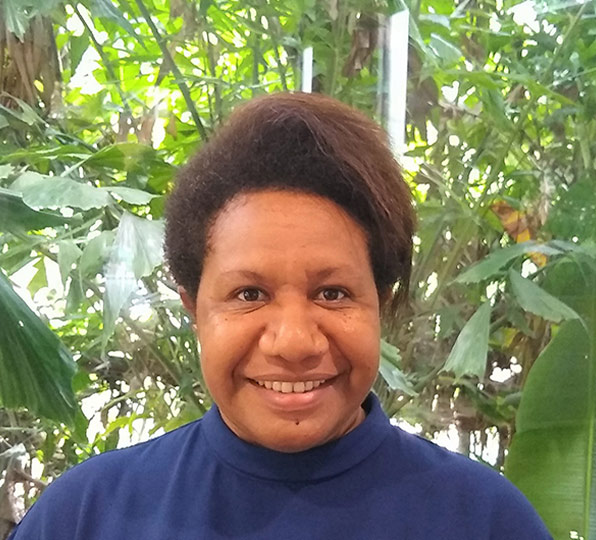
Miriam Supuma
Miriam has been working with conservation organisations in Papua New Guinea (PNG) for over 10 years; the Wildlife Conservation Society-PNG Program and later the Papua New Guinea Institute of Biological Research Inc (IBR). She joined Synchronicity Earth in April 2021. Her experience includes fundraising for conservation and capacity building projects while also overseeing project management. She has interests in the subsistence use of birdlife and its links to culture in the form of headdress adornment. Miriam holds a PhD in Environmental Science and Conservation from the James Cook University, Australia. Prior to Synchronicity Earth, Miriam was a special adviser to The Christensen Fund.
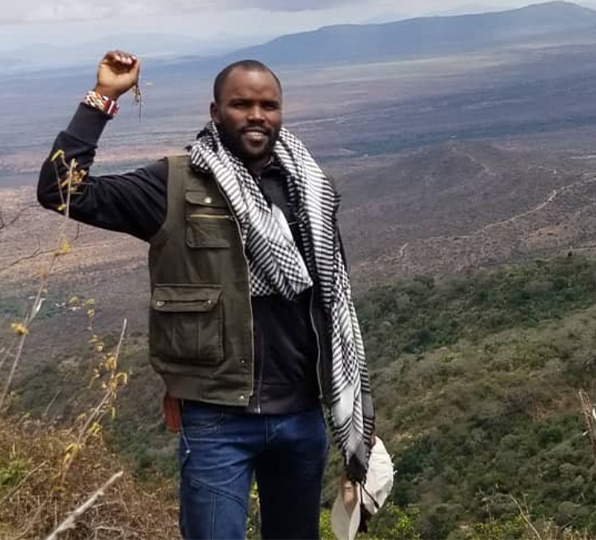
Ramson Karmush
Ramson Heads the Research Program at the Indigenous Movement for Peace Advancement and Conflict Transformation (IMPACT). He has been working at IMPACT since 2016 participating in research activities while coordinating researches teams within the organization and with partners as well as individual researchers. The researches employ a community action modal and are fundamental in the documentation of the Indigenous Peoples and Local Communities (IPLC) Traditional Knowledge, Cultures and Protection of their rights to land/ territories and natural resources in Northern Kenya.
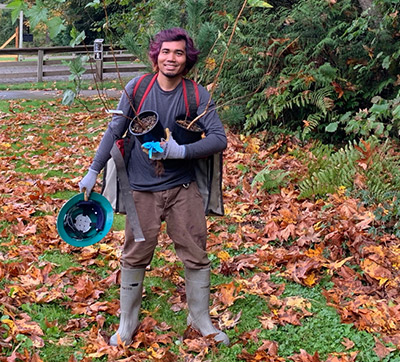
Robert Arangorin
Robert Arangorin is a conservationist and community organizer. Born and based in Palawan island Philippines. Robert is a Senior Field Officer & Lead of Operation of the environmental non-government organization, Centre for Sustainability PH, Inc. (CS). With a Mission to conserve the Philippines’ last remaining 3% of pristine rainforest through the legal establishment of protected areas.
Rafaela Nicola
Rafaela is currently the Executive Director for Wetlands International in Brazil, coordinating the Pantanal Chapter for the Corredor Azul Programme. She participates at the board of Mupan, Women in Action for the Pantanal as the Technical & Scientific Director. She is the focal point for the ICCA Consortium in Brazil. She is passionate about wetlands and livelihoods, having dedicated the last 25 years to working with environmental organizations at the Plate River Basin and the Northeast of Brazil. Over the years, she has worked to coordinate several regional initiatives addressing landscape transformations, wetlands and people, with special attention to local and traditional livelihoods. Rafaela is an ecologist with a Master in Ecology and Conservation and specializations through the “Leadership for Transition” (UNU/ILA) and the “Right Livelihood Programme”, Schumacher College.
The recording will be available immediately after the event on the Global Youth Biodiversity Facebook page.